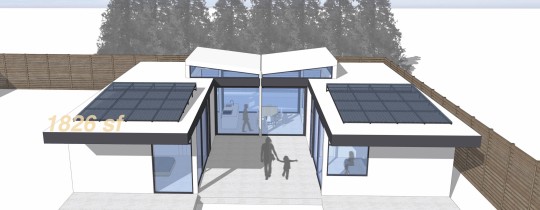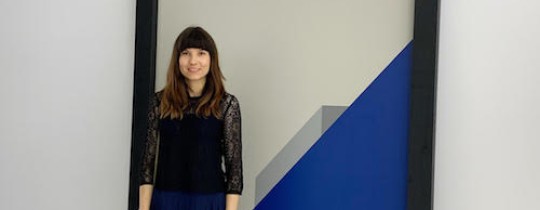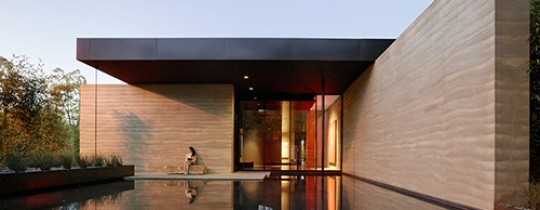
“Our firm’s work is really about small projects, carefully crafted. It expresses the hand of the builder. The role of the craftsman is so rare today. You can take something hand-crafted and replicate it by machine, but then it’s no longer craft.
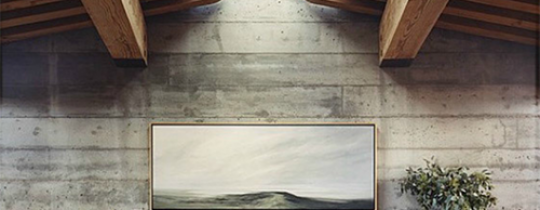
I prefer materials with depth and heft, with an elemental power about them. The power comes from the natural piece that they came from, or from the way the material was created. Our palette is nature-oriented. Even steel, I consider a natural material, because it comes out of the earth.
Tuesday, February 02, 2010 | Rebecca Firestone | Add a Comment
[...]
Olle Lundberg: Hand of a Craftsman, Part 2
“[With star clients] you have to be really “on”. There’s not much time to impress them… it’s that initial gesture that counts. You have to gain credence quickly, and bring something to the table that they didn’t expect. [When I get a new idea] it’s dreamlike at first. The idea has to be vague enough to be flexible, but clear enough to be able to return to it. I have to be disciplined about working quickly; ideas can dissipate like fog.”
Monday, February 01, 2010 | Rebecca Firestone | Add a Comment
[...]
Marketing and Business Development 2010: Use Your Windshield – Not Your Rear View Mirror
“Chances are, the new economy will not return to its former vigor. Architects must develop strategies that look to the future, rather than relying on solutions that worked six months ago. Prospective clients will likely pay in cash and drive hard bargains. Do not be false or opportunistic in your outreach; but do join boards that would benefit from your commitment. And remember that the telephone will not ring if we stare at it.”
Michael Bernard, Principal
V-Practice Consulting
Friday, January 29, 2010 | Michael Bernard | Add a Comment
[...]
Karin Payson on Architectural Practice – Part 1
“Hugh Hardy once said to me that the problem with architects is a fear of drapery! Interior design is more tactile than architectural design… I think that many architects are afraid of this tactility. They’re afraid of color.
“Before I saw Aalto’s houses in their natural setting, I was married to the grid… [but] Aalto’s floor plans, while rigorous, did not use a grid. Instead, they focused on grabbing light, on nature, and on circulation.”
(Photo: Stephen Barker)
Monday, January 18, 2010 | Rebecca Firestone | Add a Comment
[...]
Karin Payson on Architectural Practice – Part 2
“40% of my graduate class were women, but only 9% of licensed architects are women. You know where I think they are? Buried! A few years ago, Robert Venturi got the Pritzker Prize. He had a practice with his wife for over 30 years, co-wrote his books with her, but she wasn’t originally listed. So now, when he got the Pritzker Prize, she was ignored! It was a huge scandal, in my opinion.
“I don’t play therapist with my clients. I play teacher. I educate my clients about the possibilities. Sometimes clients don’t get it until they actually see the walls come down.
“I’m not interested in floor plans that are full of dead ends and pointy angles. In museums, I like simple floor plans. It makes for a more peaceful experience. I always know where I am.”
Sunday, January 17, 2010 | Rebecca Firestone | Add a Comment
[...]
Architectural Photographer Claudio Santini: Images That Make You Dream
“When I photograph a building, I am documenting the work of someone else. The photographer’s interpretation should amplify the designer’s intent. If the architecture is very strong like a master, then the photographs will show it.
“[My work is] atmospheric, a selective interpretation of feeling and light. It explains less but it makes you dream more.
“Technique and beauty must be formally balanced. The first thing to remember is that beauty is not luxury! A $10 million dollar home or a $500K home can both be equally beautiful. Simplicity is the ideal, and sometimes simple subjects are more photogenic.”
Monday, December 28, 2009 | Rebecca Firestone | Add a Comment
[...]
Social Networking and Your Design Practice at the AIA
Mark English joins fellow designers Joel Robare of JR Studio and Mike Plotnick of HOK in a roundtable discussion on the impact of social networking on their own design practices. New tools like Facebook and Twitter, combined with identity Web sites and traditional print media, collectively offer a rich toolbox from which each firm can choose its own approach.
Friday, December 04, 2009 | Rebecca Firestone | Add a Comment
[...]
Sand and Steel: Sand Studios’ Work Shows a Lightness of Hand
“Steel is feminine. Thin, strong, and lithe, it has a certain lightness. It’s the connective tissue for disparate elements; it can be used to integrate or mediate between heavier and thicker materials to make things float and stand off from one another. We fine-tune our designs using classical proportions, and le Corbusier’s Modulor system. In Miami, our style was so completely different from what was already there. Of course there was already a lot of contemporary design, but we were recognized as having a unique sensibility. My work was softer, more textured, more detailed. Unexpected materials, and a lighter hand.”
(Photos: Ken Hayden Photography)
Friday, November 06, 2009 | Rebecca Firestone | Add a Comment
[...]
Zack/deVito Architecture: Designers and Master Builders, Part 2
“Even though a painting is ‘done’ it’s never really done. I’m always walking around my house and wanting to pull a painting off the wall and work on it some more. Or I look at something in the house and wonder, ‘Why did I do that? What have I learned from that?’ One needs to be continually asking that question.” – Lise de Vito
Friday, October 30, 2009 | Rebecca Firestone | Add a Comment