Arcosanti Revisited: Why I changed my mind
by Mark English, AIA | Mark English Architects, Work/News
This spring, ten years after a visit that left me skeptical of Arcosanti, I went back to spend the night as a resident. Paolo Soleri’s desert experiment looked very different from the inside.
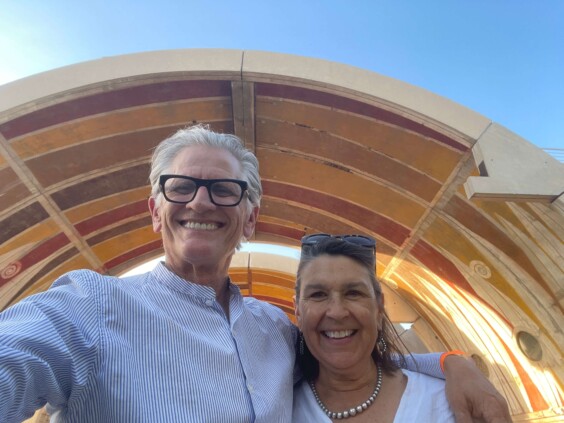
Mark & Vera
In spring 2026, Vera agreed to help me fulfill a trip I’ve wanted to accomplish for the last 15 years. I’ve always wanted to go to Canyon de Chelly in the isolated northeast part of Arizona, seduced by beautiful pictures by Ansel Adams and others of White House and other ancestral cliff dwellings.
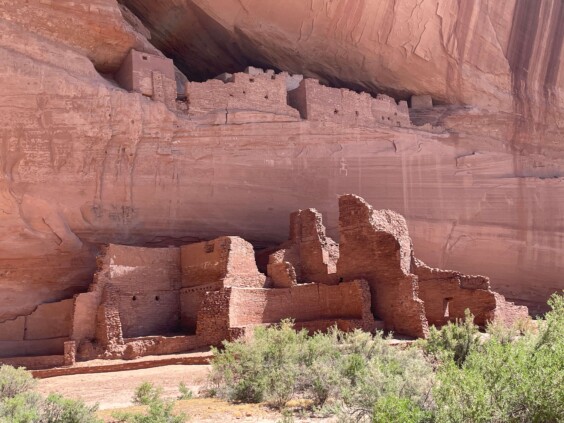
White House at Canyon De Chelly
I’ve always been interested in the Southwest. As a young person, I encountered many Pueblo ruins on our cross-country trips between California and New York. We often spent two or three weeks in summer exploring the country, especially the Southwest, which my father had an affinity for. I have tremendous memories of Meteor Crater, Wupatki Ruins, Sunset Crater, and the various kitschy and interesting trading posts along the way.
Vera Gates is a retired landscape architect and painter who now lives in Tucson, Arizona, and has been a friend for over 40 years. She decided to take a week to explore her own state and landmarks from my history and hers, along with anything else of interest we could think of.
The first night out of Tucson, we explored the ruins south of Chandler called Casa Grande. The building remnants are amazing. The main building and its modern canopy are tremendously iconic in the landscape, unforgettable in form and mass. The original people of the Phoenix area created extensive cultivated lands with canals, ceremonial centers, housing built of caliche, and ball courts ultimately derived from Mesoamerica.
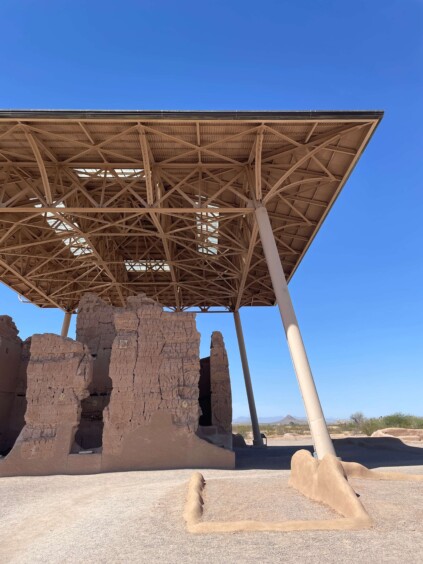
Casa Grande
Along the way, we stopped at an aboriginal cliff dwelling called Montezuma’s Castle. It embodies so much of what I love about the interaction between human beings and the stark yet rich landscape of the American Southwest. The buildings are amazing, built into a south-facing, apse-shaped overhang in the limestone cliffs overlooking a fertile, well-watered plain below. This and other similar buildings and village sites were certainly an inspiration for Paolo Soleri when he decided to develop Arcosanti nearby.
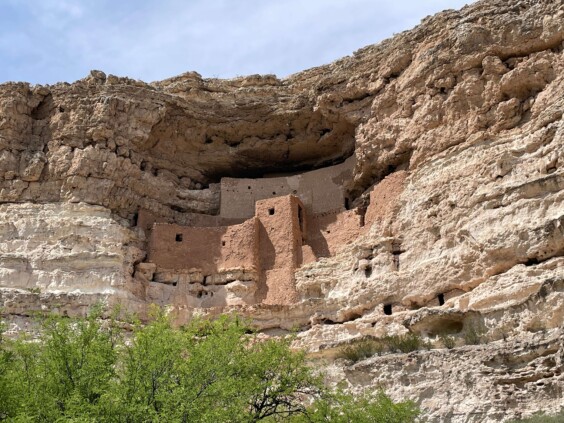
Montezuma’s Castle
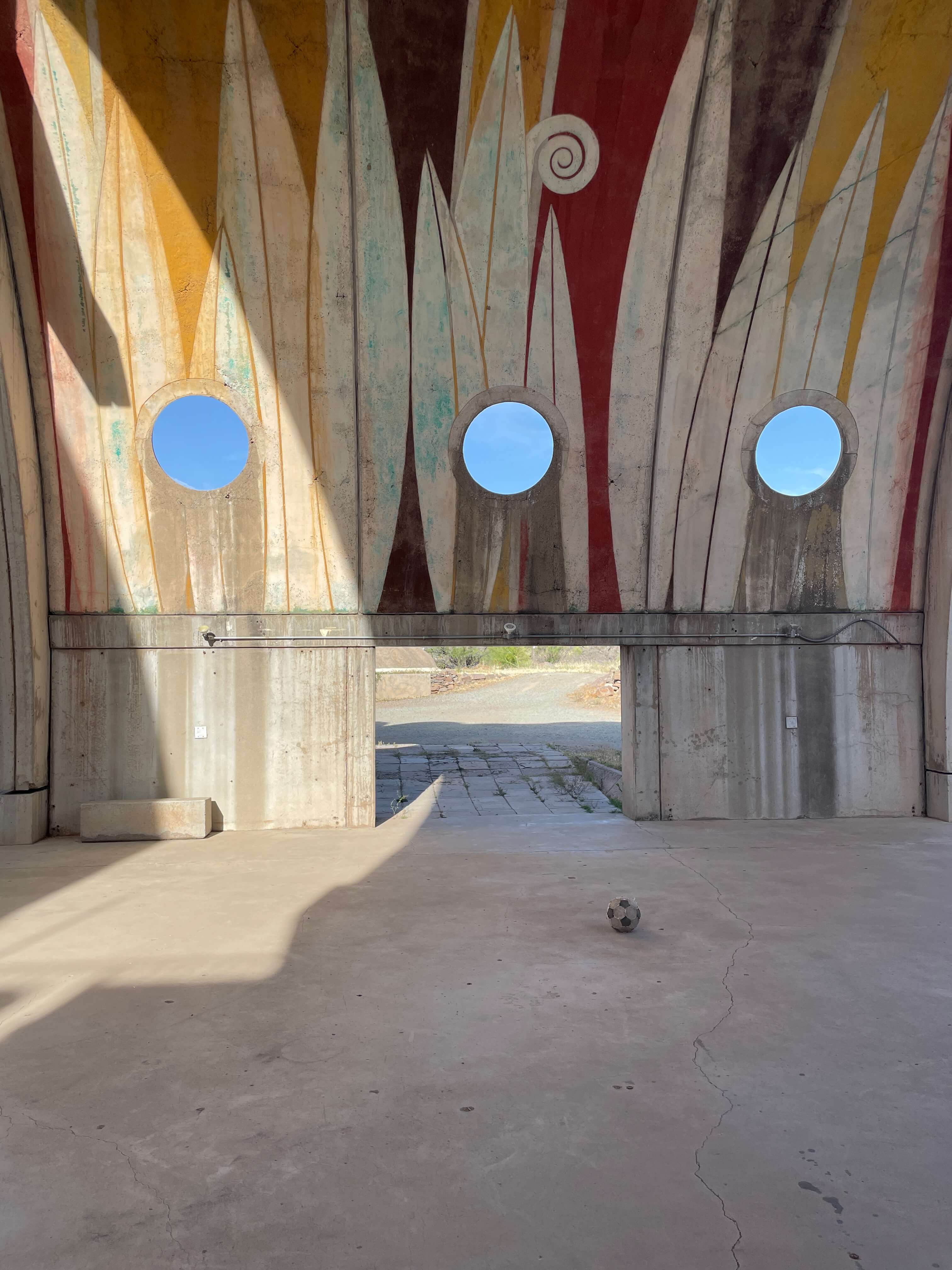
From there, we spent the night at Arcosanti. I was thrilled that Vera chose to get us accommodations there. I had visited Arcosanti ten years before and had written a post with Rebecca Firestone regarding my feelings at the time about the place and its mission. I was skeptical and fairly negative at the time, and have actually mellowed with age. I’m now much more receptive to both the mission and the outcome.
Unlike my previous visit to Arcosanti, this time I got to experience the place as a one-night resident. The experience was completely different. There are about 30 to 40 permanent inhabitants of Arcosanti today, down from several hundred that were there 10 or 15 years ago.
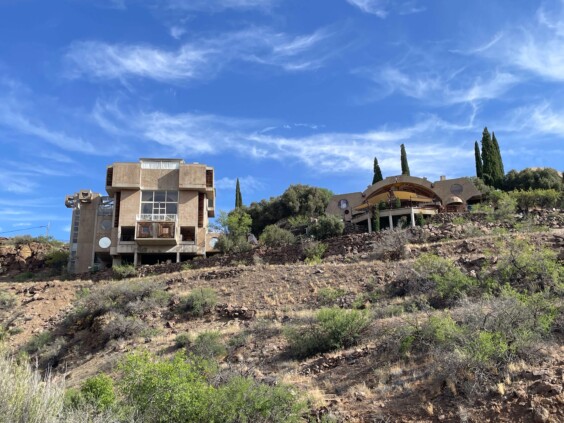
general view of Arcosanti from across the canyon
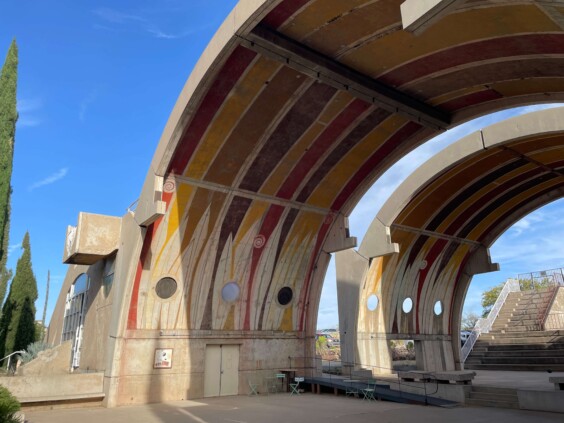
Arcosanti
We stayed in a very simple rectangular mid-century feeling building with five or six different rooms and a shared kitchen facility. The people also staying were architects, landscape architects, city planners, and former inhabitants of Arcosanti. All were people interested in the environment, philosophy, history, and community. It was a fascinating group to meet and speak with. The community kitchen forced the interaction, and it was a fabulous idea.
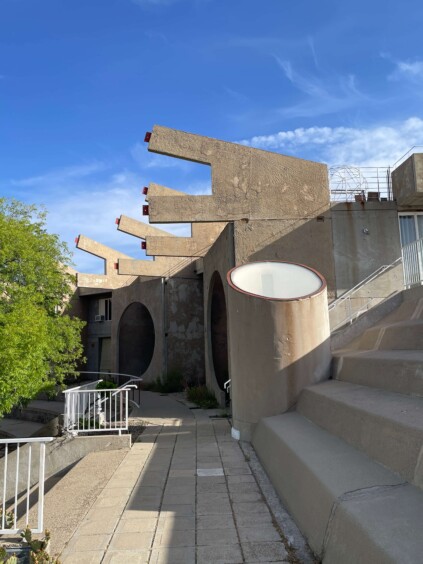
housing at Arcosanti
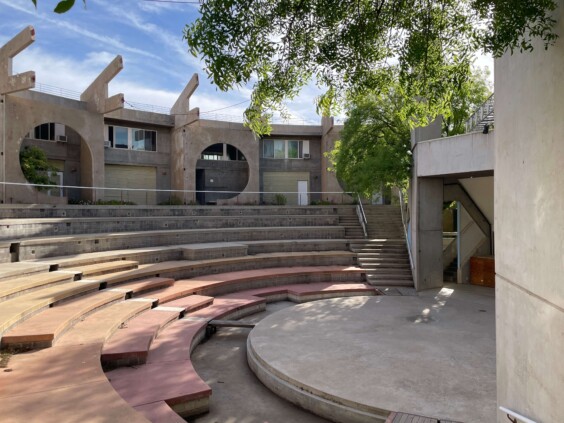
housing and amphitheater at Arcosanti
The next day we toured many of the spaces at Arcosanti from the inside, including the casting facilities for bronze bells, clay studios, and the various apsidal housing and office structures. The buildings that actually got built are only a small percentage of what Paolo Soleri had envisioned. But they have a grandeur that I did not feel before, that I didn’t understand. I was quite affected by the fearlessness of the work as built and the persuasiveness of Soleri’s vision. Twenty or thirty years’ worth of volunteers lived and worked and loved and fought creating this community.
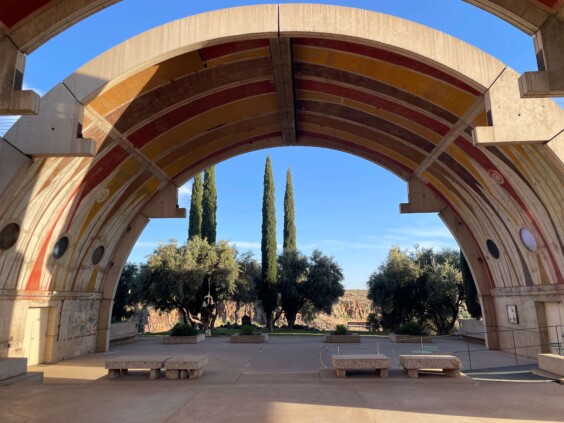
the great arch at Arcosanti
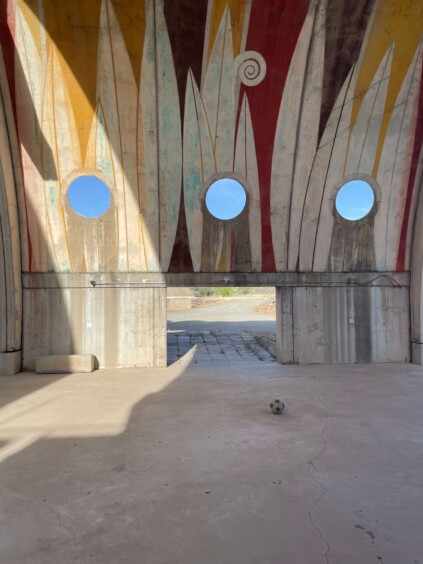
the great arch at Arcosanti
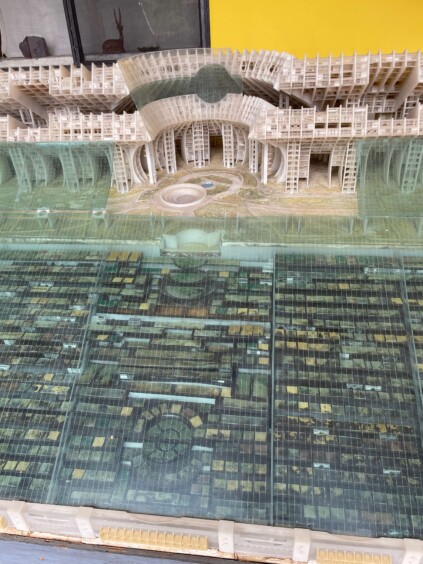
a model built by Cosanti members showing an envisioned complete Arcosanti type community
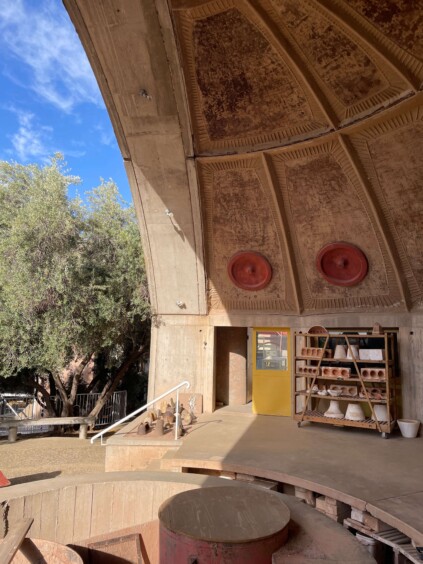
the ceramics studio apse
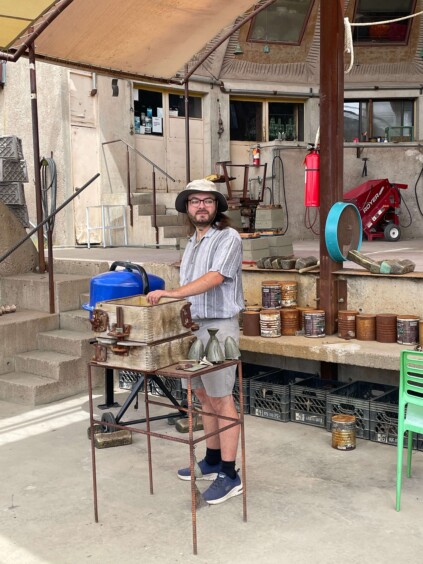
the guide sharing bronze bell casting at the foundry apse
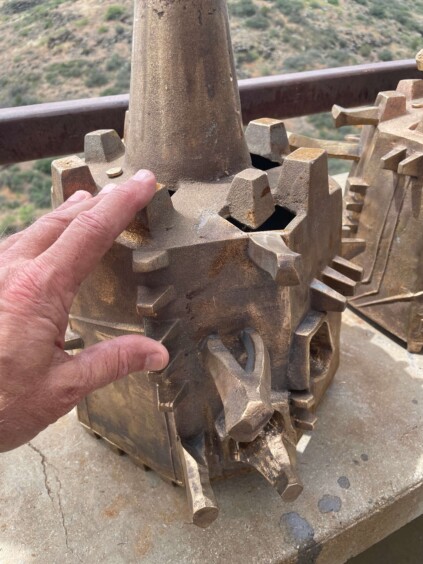
one of the tremendous one-off bronze bells
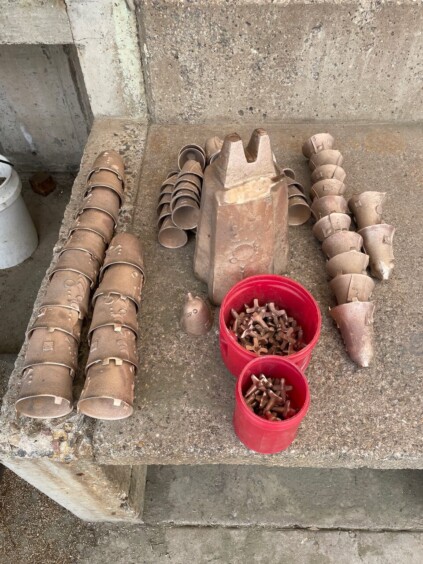
typical bronze bell components created by staff for fundraising purposes
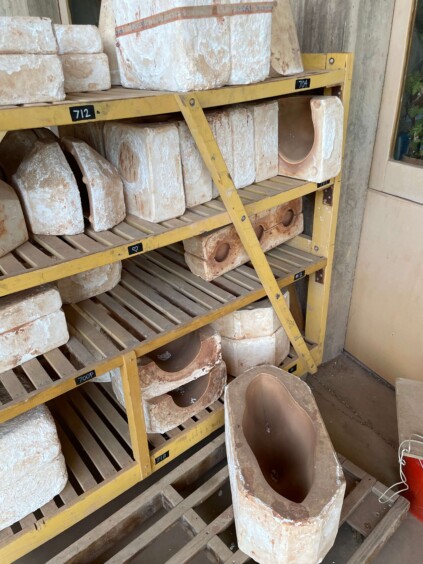
molds for the ceramics studio bells
The forms at Arcosanti are obviously influenced by the ancestral Pueblo buildings, including some of the ceremonial spaces from nearby Wupatki, as well as the forms we eventually saw at Canyon de Chelly and other places along the way. They’re also informed by Paolo Soleri’s Italian heritage, Roman ruins, and even Japanese or quasi-Asian design.
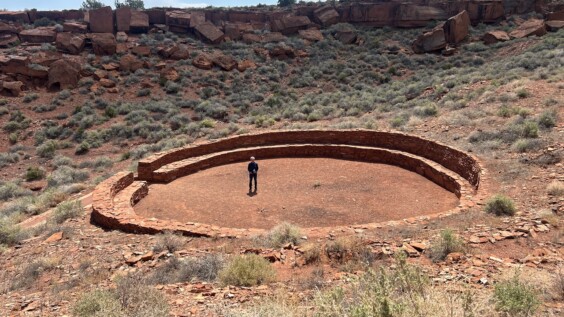
ceremonial space at Wupatki
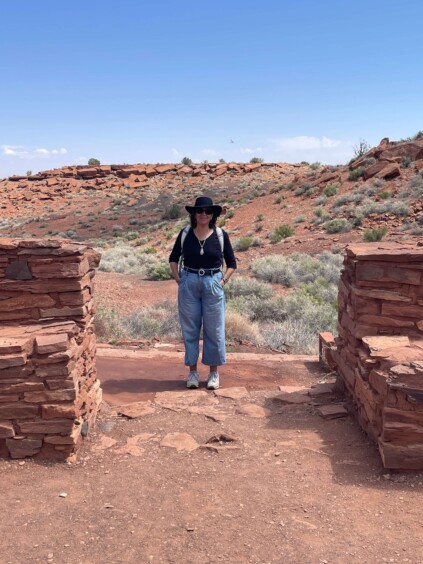
Vera at the ceremonial space at Wupatki
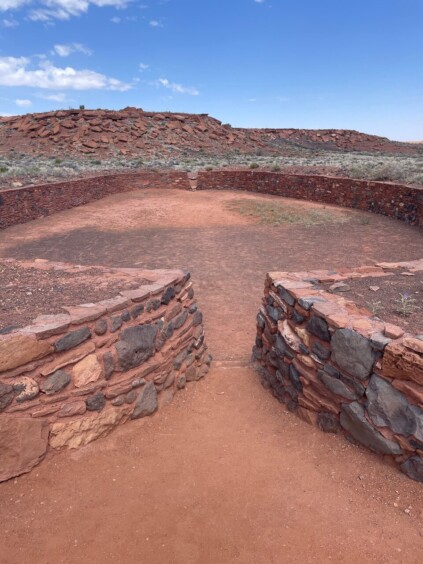
the ball court at Wupatki
It is an intoxicating, exciting, sad, but ultimately human place.
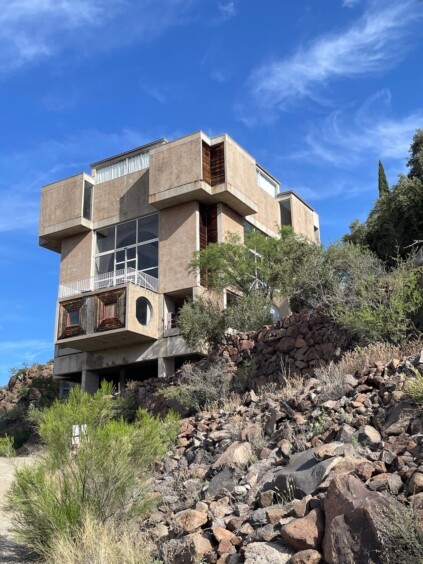
headquarters at Arcosanti